To help the increasing number of our brothers and sisters whose jobs are in jeopardy or lost, we’ll focus our posts on interviewing, until further notice.
Have you ever squandered precious seconds of an interview – decreasing your chances of being the successful candidate?
Not sure if you have or not?
In today’s video, I share an underutilized strategy that promises to improve your interview performance.
In my last post, I shared my first of two improvements to the STAR Method for answering behavioral interview questions.
If you have not watched the video titled Interview STAR Method: Improvement #1, please do so now, as today’s improvement incorporates and builds upon that improvement.
Today I’ve got a second improvement for you.
When answering an interview question you want to accomplish two ends: answer it completely AND find ways to use the question to your benefit.
This means going beyond what the question asks and including information that is on your “must say this before the interview is over” list.
You cannot rely on the interviewers to ask you all the “right questions.”
You have to FIND the place and time to add your best selling points – what I call “must say items.”
Ask yourself questions like, “What can I add to my answer? How can I say something about myself – that I want the interviewer to know – that shows me in a good light – even though the question does not ask for it directly?”
In the accompanying video, you’ll learn where to position this information and how to do it effectively.
It’s another easy change to make, and I’m convinced you’ll see the value in making it.
I’ve taught interviewing, from both sides of the table, for over 40 years. While the process has evolved, the need for writing and delivering answers that impress the interviewer remains as important as ever.
I’ve simplified the process to six essential steps.
In written form, the steps seem simple to follow, and they are. Unfortunately, from the thousands of interviews I’ve witnessed, “simple to follow” does not always translate into “followed,” and it’s easy to identify who prepared properly and who did not.
When you follow my process, it produces answers that impress any interviewer.
In addition to reviewing the steps below, I encourage you to watch the embedded video. In the video, the steps come alive as I guide you through an example of designing an answer to a question you will face in every interview.
Brainstorm all the content to include in a given answer. List individual words, phrases, etc., in no particular order.
Convert the words, phrases, thoughts, and ideas, into complete sentences.
Sequence the sentences, so the answer flows and is easy to understand.
Read, audio record, playback and edit the answer. Edits include:
Lengthening existing content
Shortening existing content
Deleting existing content
Adding new content
Repeat steps 3 and four until you are satisfied with the answer
Practice the answer sufficiently until you can deliver it, under pressure, close to perfect.
Don’t kid yourself; to a novice interviewer, a mediocre answer may suffice in getting you a second look. To an expert interviewer, only the best answers impress.
What you say in an interview will change your life forever, for better or worse. Change it for the better with impressive answers.
Prepare to interview for the best jobs in front of the best interviewers, and compete against the best candidates and do YOUR best. You owe it to yourself!
People frequently ask me what’s the best way to search for a job or identify career opportunities they’re qualified for? My answer is to utilize every means available.
Hire a resume posting service to post your resume
Personally post your resume on job boards and the net
Make your search a part of every conversation
Find businesses in your search area and Cold Call them
Join Networking Organizations
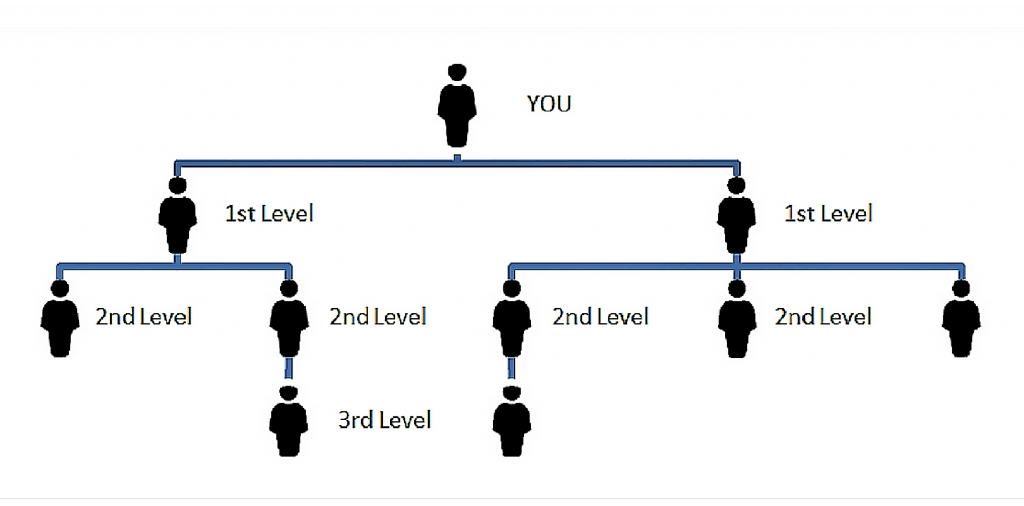
Network one-on-one
I often find that people utilize only one or two methods. This indicates
trust in the effectiveness of methods used
limited knowledge of available methods
comfort level with a longer search time
discomfort utilizing some methods
My question is if you were hurting, and faced with losing your happiness, mental stability, health or residence, how would your strategy change? Remember, activity translates into results.
As we have become more reliant on digital communication one of the most successful ‘active’ search methods is being underutilized, and it is personal one-on-one networking. This approach enlists personal, professional, academic or familial contacts to help you achieve your goals.
70 percent of people in 2016 were hired at a company where they had a connection.
80 percent of professionals consider professional networking to be important to career success
Harvey Coleman, author of Empowering Yourself, The Organizational Game Revealed says it’s not what you know but who you know, and who knows you, likes you and is willing to speak for you that’s important. Between Performance on the job, your Image or person brand, and Exposure – who knows you and can speak for you – Exposure is the most valuable.
In this video, I’ll share
the proper way to Network one-on-one
how to avoid discouragement by setting realistic expectations
Separate yourself from your competition and include one-on-one networking in your search. You’ll thank yourself in the end for having OUTworked others and INcreased your chances of success.